
What Is Metal Spinning?
Have you ever run into a manufacturing challenge where the usual methods just didn't feel like the right fit? Welding is often the go-to solution for creating strong, reliable parts, but it isn't always the most efficient or cost-effective option, which is where another, less-talked-about process comes in: metal spinning.
What is metal spinning? If you've never heard of it, you're not alone. Even seasoned professionals in industrial manufacturing sometimes don't realize that metal spinning exists, let alone that it can solve problems faster, cheaper, and with less waste than traditional fabrication.
We'll walk through what metal spinning is, how it works, why it's often considered a welding alternative, and the advantages it can bring to your projects. By the end, you'll see why this decades-old process is making a serious comeback in modern manufacturing
How Metal Spinning Works
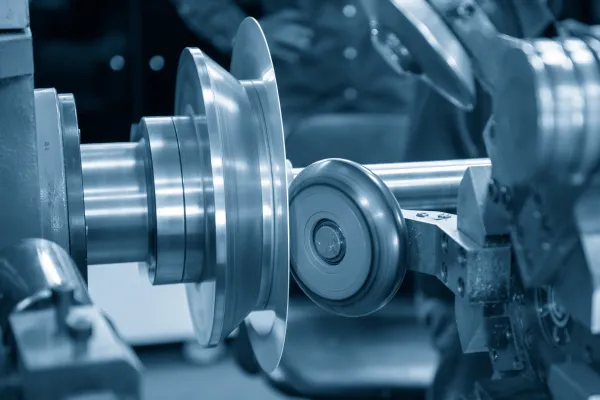
Metal spinning is a cold-forming process that transforms a flat sheet of metal into a strong, seamless, rounded shape. Instead of cutting and welding multiple pieces together, a single sheet is reshaped over a rotating mandrel (a mold) until it takes the desired profile. The result? A perfectly symmetrical part like a cone, cylinder, dome, or hemisphere, without seams or weak points.
If you've ever watched a potter shape clay on a wheel, you already have the right picture in mind. Only here, the "clay" is sheet metal, and the shaping tools are designed for industrial strength.
Here's a step-by-step look at how it works:
1. Cutting the Blank
It all begins with a flat circle of sheet metal, known as a “blank.” This disk is cut to size depending on the final part's dimensions.
2. Mounting on the Mandrel
The blank is placed against a mandrel - a specially designed mold that defines the final shape of the part.
3. Spinning the Metal
The mandrel and blank rotate at high speed on a lathe. As the metal spins, tools are pressed against it, gradually forcing the blank to conform to the mandrel's contour.
4. Forming the Shape
Whether done manually or with CNC automation, the spinning process reshapes the blank into a seamless, symmetrical part. CNC is especially valuable for large runs, ensuring consistency, tight tolerances, and speed.
5. Finishing Touches
Once the part is formed, additional operations, such as trimming, cutting, or secondary fabrication, can be applied to meet your requirements.
Because the material is cold-worked, meaning no melting or pouring is involved, the metal's natural strength is preserved, and in many cases even enhanced. That means fewer weak points, less waste, and more consistent results. Plus, the method is highly versatile, working effectively with a wide range of materials, including small, precise components and large, heavy-duty parts, as well as aluminum, stainless steel, copper, and specialized alloys.
Real-life examples: The tank heads used in agriculture, the protective housings around industrial fans, and the hemispheres used in marine equipment are often produced by spinning rather than welding, delivering strength and efficiency in one seamless piece.
Metal Spinning vs. Welding
When most people in manufacturing think about shaping or joining metal, welding is the default solution. And for good reason: welding is a tried-and-true process that plays a vital role in countless industries, but it isn't always the most efficient or effective option. That's where metal spinning steps in as one of the best welding alternatives.
Why Welding Isn't Always Ideal
Welding typically involves joining multiple pieces of metal together. While it's strong, those seams can create potential weak points over time, especially in parts that face high stress, vibration, or environmental exposure. Welding also adds steps to production, such as cutting, joining, grinding, and finishing, which can increase labor, costs, and lead times.
How Metal Spinning Changes the Game
Instead of welding pieces together, metal spinning starts with a single sheet of metal and forms it into the desired shape. That means:
- No seams or joints that could fail under pressure.
- Stronger parts because the metal's grain structure actually gets tighter during cold forming.
- Faster turnaround since shaping and forming happen in one continuous process.
- Less material waste compared to cutting and welding multiple sections together.
When To Choose Spinning Over Welding
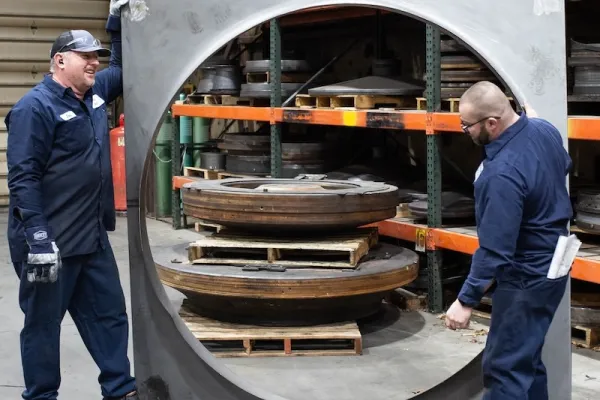
Metal spinning is particularly valuable for creating symmetrical, rounded parts, such as cones, hemispheres, tank heads, and fan housings. In these cases, a welded solution might require cutting multiple pieces and joining them, whereas spinning produces the same part seamlessly in a fraction of the time.
The result? Lower production costs, higher durability, and fewer headaches down the line. Welding will always have its place in manufacturing. But for the right applications, metal spinning is a smarter choice.
Advantages of Metal Spinning
Why should you consider metal spinning for your next project? Beyond being a welding alternative, it brings a whole set of advantages that make it a smart choice for industrial manufacturing.
- Strength and Durability: Because metal spinning reshapes a single sheet of metal without cutting or welding, the finished part is seamless.
- Cost Efficiency: Metal spinning uses less material compared to fabrication methods that require cutting and joining. Fewer steps also mean reduced labor and faster production times.
- Versatility Across Materials: Aluminum, stainless steel, copper, special alloys - you name it, it can probably be spun.
- Flexibility in Production Runs: Whether you need a single prototype, a limited run, or high-volume production, metal spinning adapts. Manual spinning works well for custom one-offs, while CNC spinning handles large orders with speed and precision.
- Reduced Waste and Sustainability: Because the process shapes a single disk instead of welding multiple cut pieces together, there's less scrap material.
- Faster Lead Times: By combining forming and shaping into one streamlined process, metal spinning helps reduce lead times so you can keep projects on schedule and clients happy.
Industries That Benefit From Metal Spinning
One of the biggest advantages of metal spinning is its versatility. In fact, you'll find spun parts quietly at work across a wide range of industrial sectors. Here are some of the key industries that rely on this process:
- Air Movement: Fan housings, blower components, and ventilation systems often use spun parts. The seamless design helps reduce vibration and improve airflow efficiency.
- Agriculture: Tank heads, feed hoppers, and protective covers are common in agriculture. Spinning ensures durability and strength, which is critical for equipment that operates in rugged environments.
- Transportation: From automotive to heavy trucking, spun components like wheel covers, hubs, and housings deliver strength without unnecessary weight.
- Oil & Gas: Pressure vessels and storage tanks need reliable, seamless parts. Metal spinning provides the structural integrity required to handle tough conditions.
- Food Processing: Spun stainless steel parts are hygienic, easy to clean, and resistant to corrosion, ideal for food production environments where safety and sanitation are non-negotiable.
- Marine: Marine equipment demands corrosion resistance and durability. Spun aluminum and stainless steel components hold up to saltwater and heavy use.
Is Metal Spinning Right for Your Project?
Here are a few quick indicators:
- Your part needs to be round and symmetrical. Cones, metal cylinders, custom tank heads, metal hemispheres, and fan panels are a few examples.
- You want fewer seams and stronger parts. A single-piece spun part eliminates weld lines and weak points.
- You're looking for a welding alternative. Spinning often produces the same outcome faster, stronger, and at a lower cost.
- You need flexibility. Whether you're testing a prototype or scaling to full production, spinning adapts to your needs.
- You want efficiency and sustainability. Less waste, less labor, faster turnaround - it checks all the boxes.
Of course, there are situations where welding or other fabrication methods make more sense. But if your project fits the profile above, metal spinning could be the smarter, more cost-effective choice.
Explore the Possibilities of Metal Spinning
For anyone in industries like agriculture, air movement, food processing, transportation, or oil and gas, metal spinning could be the solution you didn't know you were looking for. The best way to find out is to talk to our team at Wenzel Metal Spinning. We can evaluate your needs and guide you to the most efficient solution. Let's talk!
FAQs: Advantages of Metal Spinning
Here are some quick FAQs to clear up common questions we hear from manufacturers exploring this process:
Metal spinning is used to create round, symmetrical metal parts like cones, domes, cylinders, and hemispheres. These parts are common in industries such as agriculture, transportation, food processing, marine, and more.
Because spinning creates parts from a single sheet of metal with no seams or joints, the finished product is often stronger and more durable than welded parts.
Unlike casting or forging, metal spinning is a cold-forming process. The metal isn't melted or poured; it's shaped over a mandrel while spinning, which often strengthens the material.